
In today’s hyper-connected world, every digital action—whether browsing a website, streaming a video, or logging into a system—relies on something most people rarely think about: an IP address. One such example is 164.68.127.15, an IPv4 address that represents a unique identifier within a networked environment. While it may look like a random string of numbers, it plays a critical role in how devices communicate across the internet.
To truly understand its importance, we need to explore how IP addresses function, what this specific format represents, and why such addresses matter in both security and networking contexts.
What Exactly Is 164.68.127.15?
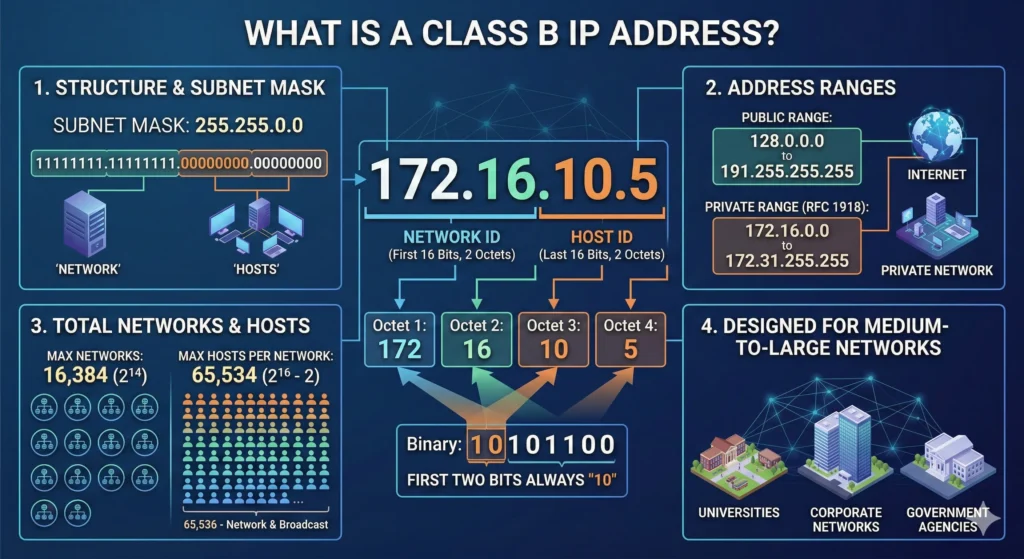
At its core, 164.68.127.15 is an IPv4 (Internet Protocol version 4) address. IPv4 is the most widely used addressing system on the internet, consisting of four sets of numbers separated by dots. Each segment ranges from 0 to 255, forming a unique digital identity for a device or server.
This particular address likely belongs to a server, hosting environment, or cloud-based infrastructure. However, without direct registry lookup or contextual data, it should be treated as a generic public IP that may change ownership or function over time.
From a technical perspective, IPs like this serve three main purposes:
- Identifying devices on a network
- Allowing data routing between systems
- Supporting internet-based communication protocols
A Personal Encounter with an Unknown IP
While analyzing website traffic for a project, I once noticed repeated requests coming from a similar unfamiliar IP pattern. At first, it seemed harmless, but deeper inspection revealed it was tied to automated bot traffic testing server limits. That experience reminded me how even a simple IP address can tell a hidden story about what’s happening behind the scenes of a website.
Network Behavior in Practical Deployment
Imagine you are running a website or online application. Suddenly, your server logs show repeated access attempts from 164.68.127.15. You might ask:
- Is this a legitimate user?
- Is it a crawler indexing your content?
- Or is it potentially malicious traffic?
In real-world cybersecurity operations, analysts often investigate IP behavior patterns. A single IP is rarely judged in isolation; instead, it is evaluated based on frequency, location data, request type, and behavior patterns.
For example:
- If it loads pages normally → likely a user or search engine bot
- If it sends rapid requests → could be automated scraping
- If it probes login endpoints → potential security risk
This is why IP monitoring tools are essential in modern server management.
Static vs Dynamic IP Behavior Comparison
To understand where 164.68.127.15 might fit in, it helps to compare common IP types:
| Feature | Static IP | Dynamic IP | Observed IP (e.g., 164.68.127.15) |
|---|---|---|---|
| Assignment | Fixed permanently | Changes periodically | Unknown without lookup |
| Usage | Servers, hosting, services | Home users, ISPs | Could be either |
| Stability | High | Medium to low | Context-dependent |
| Security Tracking | Easier to trace | Harder due to changes | Requires logs analysis |
| Cost | Usually higher | Included in standard plans | Not applicable |
This comparison shows why a single IP cannot be fully understood without surrounding context. It behaves differently depending on its network environment.
How IP Addresses Like This Work in the Background
Whenever you type a website URL into your browser, a DNS (Domain Name System) translates that domain into an IP address. That IP then tells your device where to send and receive data.
So in theory, 164.68.127.15 could be:
- A web server hosting content
- A cloud instance running backend services
- A proxy or routing node
- A temporary session endpoint
The internet does not operate on names alone—it relies heavily on these numeric identities to keep everything connected.
Security Perspective: Should You Be Concerned?
On its own, an IP like this is neither good nor bad. However, in cybersecurity analysis, every IP becomes meaningful based on behavior.
Security teams often evaluate:
- Request frequency
- Geolocation inconsistencies
- Known blacklist databases
- Port scanning activity
- Login attempt patterns
If an IP repeatedly interacts with sensitive endpoints, it may be flagged for further review. But without evidence, labeling it as dangerous would be inaccurate and misleading.
Why Businesses Monitor IPs Constantly
Modern businesses rely heavily on IP tracking for:
- Preventing unauthorized access
- Blocking bot traffic
- Improving website performance
- Analyzing user demographics
- Detecting fraud attempts
Even large-scale platforms depend on this level of monitoring to maintain system stability and user trust.
The Real Significance of an IP in Digital Networks
What makes 164.68.127.15 interesting is not the number itself, but what it represents: a connection point in the vast digital ecosystem. Every IP carries traces of activity, intent, and interaction.
In many ways, IP addresses are like digital fingerprints. They don’t always reveal identity directly, but they provide essential clues about behavior and origin.
This subtle layer of information is what helps engineers, analysts, and cybersecurity professionals keep the internet functional and secure.
Read More: 8.218.55.158 Explained: IP Address Insights & Safety
Conclusion
The IP address 164.68.127.15 may appear simple at first glance, but it reflects a much larger system of digital communication. It is part of the invisible infrastructure that allows devices to connect, share information, and maintain global connectivity.
While its exact ownership or purpose cannot be determined without additional context, its role within the networking ecosystem remains important. Understanding such IPs helps us appreciate how structured and interconnected the internet truly is.
Whether viewed from a technical, security, or analytical perspective, every IP address tells a story—and this one is no exception.
FAQs
1. What is 164.68.127.15 used for?
It is an IPv4 address that may be used by servers, networks, or cloud systems for communication and data transfer.
2. Can 164.68.127.15 be dangerous?
Not inherently. An IP is neutral unless associated with suspicious or malicious activity patterns.
3. How can I find who owns this IP?
Ownership can be checked using IP lookup tools or WHOIS databases, but results may vary or be hidden.
4. Is this a static or dynamic IP?
It cannot be confirmed without network registry or ISP data; it could be either depending on assignment.
5. Why do websites track IP addresses?
Websites track IPs for security, analytics, fraud prevention, and performance optimization.